

Propane Tank Sizes for Home Appliances: What to Know Before Adding New Equipment
Spring is a popular time for home upgrades, outdoor projects, and adding new propane-powered appliances. Before expanding how you use propane, understanding propane tank sizes can help ensure your system supports both current needs and future plans.
- Why Spring Is a Smart Time to Plan – Spring projects and outdoor upgrades often increase propane demand, making it a practical time to plan.
- Propane Tank Size Impacts Performance and Convenience – Proper tank sizing helps support multiple appliances and consistent performance across seasons.
- Common Propane Tank Sizes and What They Support – Different tank sizes are designed to support different combinations of appliances and usage levels.
- Spring Appliances That May Require a Larger Tank – Outdoor features, heaters, and generators can significantly change propane demand.
- Managing Your Propane System – Installation planning, refills, and account updates all work together to support reliable service.
Why Spring Is a Smart Time to Plan
Spring is a common time for homeowners to add or upgrade propane appliances as outdoor living projects and home improvements get underway. Grills, patio heaters, firepits, pool heaters, and generators can all increase propane usage compared to winter-only heating needs.
Planning propane tank size ahead of time helps support both indoor and outdoor appliances without interruption. Taking a proactive approach allows you to think through how new equipment may fit into their overall propane system.
How Propane Tank Size Impacts Performance and Convenience
Propane tank size plays an important role in how a system performs throughout the year. Choosing the right size helps ensure appliances have the fuel they need when demand increases.
- Tank size affects how often refills may be needed, especially when multiple appliances are in use.
- Larger tanks are better suited to supporting several propane-powered systems at once.
- Proper sizing helps maintain consistent appliance performance across changing seasons.
While propane usage varies by household, planning tank size with current and future needs in mind helps support long-term convenience.
Common Propane Tank Sizes and What They Support
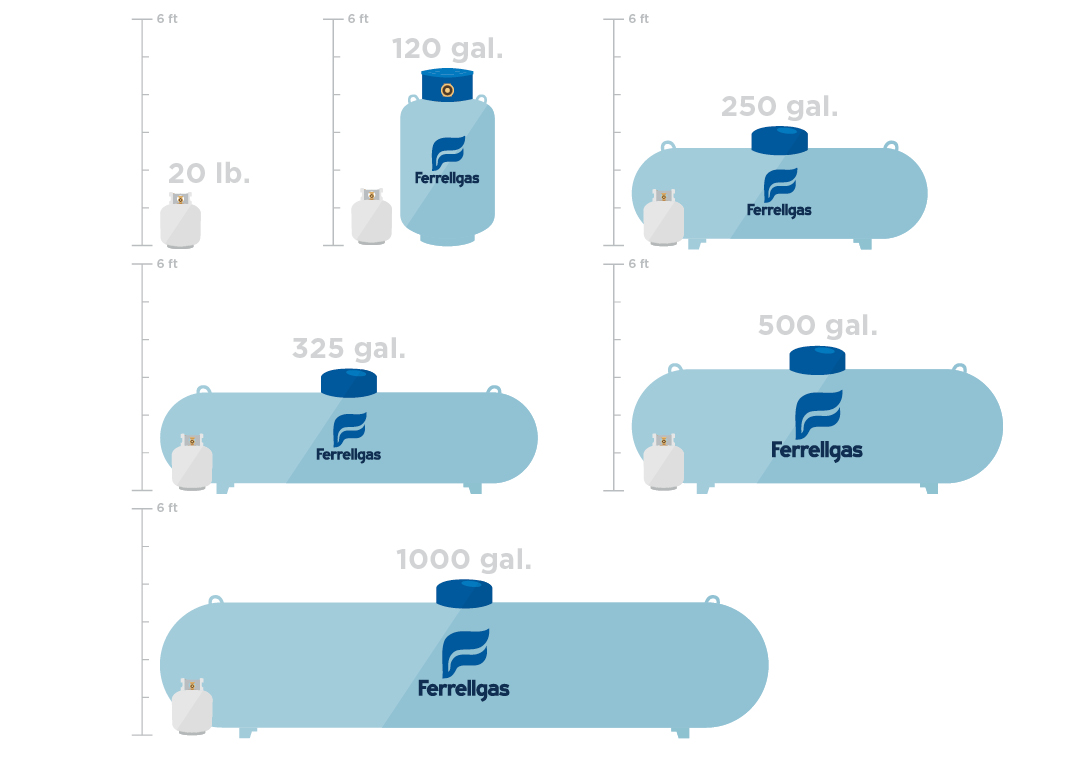
Understanding common propane tank sizes can help you evaluate what may work best for your setup. Usage examples are general and can vary based on appliance type, frequency of use, and household needs.
Propane tank sizes for typical home uses include:
- 20-lb propane tanks: Commonly used for backyard grills and portable outdoor appliances.
- 120-gallon propane tanks: Designed for homes using propane for one or two low-use appliances like fireplaces, clothes dryers, or space heaters.
- 250-gallon propane tanks: Support moderate propane use, including heat for modest-sized homes or those with multiple appliances.
- 325-gallon propane tanks: Great for backup generators or homes using less than 500 gallons of propane per year.
- 500-gallon propane tanks: The standard tank size for most homes, powering central heating systems and multiple propane appliances.
- 1,000-gallon propane tanks: Ideal for large properties with high propane usage, including multiple appliances and whole-home heating systems.
Appliances That May Require a Larger Tank
As you add new propane appliances, overall propane needs may evolve. Planning tank size with these additions in mind helps support consistent performance across appliances.
Outdoor Living With Propane Appliances
Spring upgrades often include outdoor features designed for regular use, such as built-in grills, outdoor kitchens, firepits, patio heaters, and pool or spa heaters. Because these appliances are typically installed for ongoing enjoyment, selecting a tank size that supports consistent use helps keep outdoor spaces comfortable and ready.
Indoor and Outdoor Propane Space Heaters
Propane space heaters add supplemental warmth in both indoor and outdoor areas, including basements, workshops, patios, and garages. When these heaters are part of everyday routines, factoring them into tank size planning helps ensure propane is available when and where it’s needed.
Backup Power With Propane Generators
Generators are an important consideration when choosing a propane tank size. Generator capacity and expected run time both influence how much propane may be needed alongside other appliances, making thoughtful tank sizing an important part of backup power planning.
Managing Your Propane System When Adding New Appliances
Planning Propane Tank Size and Installation
When adding or upgrading propane appliances, tank sizing is an important part of the planning process. The right tank size helps support current appliances while allowing flexibility for future upgrades, whether that includes outdoor features, space heaters, or backup power.
Spring is a popular time for these projects, making it a natural window to plan propane tank installation. Working with a trusted propane supplier helps ensure the tank size aligns with both indoor and outdoor needs, and that installation is handled safely by qualified professionals. Before digging or landscaping, remember to call 811 for help locating underground utility lines such as electricity, water, and sewer. Your supplier can identify where propane lines are buried. These steps help avoid accidental damage.
Refilling Your Propane Tank With Ferrellgas
Ferrellgas offers flexible delivery options to support different propane usage needs, especially as new appliances are added.
Auto Fill delivery service* is great for customers with consistent propane usage — such as home heating or powering multiple appliances — and who receive more than one delivery per year. It’s also a more convenient, hassle-free approach to propane refills. Ferrellgas uses your household’s usage history and local weather data to estimate when a delivery is needed and schedule it automatically. Adding a digital tank monitor* provides even more accuracy by giving you and Ferrellgas real-time visibility into propane tank levels.
Will Call delivery service is designed for customers who prefer to place orders on their own schedule. With this option, customers monitor their tank gauge and place orders themselves, which should be when the tank reaches 30% or at least 7 business days before they anticipate needing propane. Ferrellgas customers using this service can request a refill by texting ORDER to 573-207-5975**, logging in to MyFerrellgas.com, or calling 888-337-7355.
*Qualification and active credit status are required for Auto Fill service. Availability and cost of digital tank monitors may vary by location.
Keep Your MyFerrellgas Account Up to Date
Adding new propane appliances may change overall propane usage. Ferrellgas customers should update appliance information in their MyFerrellgas account, so service and delivery planning can reflect current needs. Accurate account details help Ferrellgas support consistent and reliable service.
Choose the Right Tank Size With Help From Ferrellgas
Choosing the right propane tank size helps support comfort, convenience, and seasonal flexibility. From outdoor upgrades to whole-home systems, proper planning makes it easier to use propane with confidence.
Ferrellgas helps plan propane tank installation and refills while supporting your home and long-term energy needs. Working with a trusted propane supplier ensures your system is ready as your home and propane use evolve.
Manage Your Propane System
With Confidence
**By texting ORDER, you agree to receive automated promotional text messages. Message and data rates may apply. Up to 10 messages per month. Reply STOP to unsubscribe or HELP for assistance. Messages are sent via automated systems. Delivery is subject to carrier availability. If you have pay-in-advance terms, you will be asked to pay using a secure link we will send from 573-207-5975.
CATEGORIES
Archives
- Spring 2026
- Winter 2025
- Fall 2025
- Summer 2025
- Spring 2025
- Winter 2024
- Fall 2024
- Summer 2024
- Spring 2024
- Winter 2023
- Fall 2023
- Summer 2023
- Spring 2023
- Winter 2022
- Fall 2022
- Summer 2022
- Spring 2022
- Winter 2021
- Fall 2021
- Summer 2021
- Spring 2021
- Winter 2020
- Fall 2020
- Summer 2020
- Spring 2020
- Winter 2019
- Fall 2019
- Summer 2019
- Spring 2019
- Winter 2018
- Fall 2018
- Summer 2018
- Spring 2018
- Winter 2017