

Propane Pool Heaters: Enjoy a Longer, Warmer Swim Season
A backyard pool is a major investment in comfort and recreation. Adding a propane pool heater allows homeowners to extend their swim season and enjoy more consistent water temperatures throughout the year.
Here is what to know before installing or upgrading a propane pool heater:
- Why Choose a Propane Pool Heater – Explore the performance and lifestyle benefits that make propane a popular choice for pool heating.
- How a Propane Pool Heater Works – Understand how BTU ratings, fuel usage, and heating capacity influence performance.
- Choosing the Right Size Heater and Propane Tank – Learn how pool size, climate, and overall propane use affect equipment sizing decisions.
- What to Know About Installation and Safety – Review key planning considerations, ventilation needs, and professional installation guidance.
- Planning Propane Deliveries for Pool Season – See how tank monitoring and delivery options support uninterrupted pool use.
Why Do Homeowners Choose Propane Pool Heaters?
Homeowners often choose propane pool heaters because they provide greater control over when the pool is open and comfortable. Instead of relying solely on outdoor temperatures, a propane heater allows homeowners to set and maintain their preferred water temperature.
Key Benefits of a Propane Pool Heater
- Fast Heating Performance: Propane is energy-dense, allowing pool heaters to deliver strong heating performance without extended warm-up periods. Pool temperatures can be raised within hours rather than days, making them well suited for last-minute gatherings or unexpected temperature changes.
- Consistent Water Temperature: Once the desired temperature is reached, propane heaters are designed to maintain it steadily. This helps homeowners get more consistent use from their pool, even as weather conditions shift.
- Cost Efficiency: Propane-powered pool heaters convert a high percentage of fuel into usable heat, supporting maximum energy use without unnecessary waste. This efficiency can help keep operating costs manageable over time.
- Flexible Installation Options: When planned with licensed professionals, propane pool heaters can be integrated into a variety of outdoor layouts and backyard designs.
- Reliable Operation: Because propane is stored on-site, it provides a dependable fuel supply that’s readily available when you need it. With proper tank sizing and refueling, propane can support long-lasting and consistent pool heating throughout the year.
How Does a Propane Pool Heater Work?
Propane pool heaters are rated by British Thermal Units, or BTUs. The BTU rating reflects how much heat the unit can generate. Higher BTU ratings generally increase heating speed, allowing the pool to reach the desired temperature more quickly. Understanding how a propane pool heater works helps homeowners better plan propane tank installation and seasonal fuel needs.
In simple terms, a propane pool heater burns propane to generate heat, which is transferred to the water as it circulates through the heating system and back into the pool. Compared to electric heat pump systems, propane heaters typically heat water more quickly because they produce higher heat output in a shorter period of time.
A good way to estimate propane use is by converting a heater’s British Thermal Unit (BTU) rating into gallons of fuel, since propane has a consistent energy content of about 91,500 BTUs per gallon. A pool heater consuming 100,000 BTUs per hour would use a little over one gallon of propane if operating at full output, meaning a 400,000 BTU unit would use roughly four gallons per hour under continuous heating conditions. However, real-world propane consumption varies based on factors such as pool size, outdoor temperature, and how often the heater cycles on and off.
Choosing the Right Size Heater and Propane Tank
Selecting the right heater and tank size ensures the system performs as expected without unnecessary strain or inconvenience. A propane system evaluation may be needed to determine your propane tank requirements for a pool heater.
What Size Pool Heater Do I Need?
Pool heater sizing is typically based on the amount of heat needed to offset heat loss from the water’s surface. According to the U.S. Department of Energy (DOE), key factors include the pool’s surface area, desired temperature rise, average air temperature, and wind conditions. These variables are used to estimate the required heating capacity in BTUs per hour, helping ensure the heater can maintain comfortable water temperatures under real-world conditions.
Heat retention can vary based on installation and exposure. Because most heat loss occurs at the water’s surface and is influenced by wind and air temperature, above-ground pools that are more exposed to the elements may cool more quickly.
In some cases, equipment sizing may also be influenced by local building codes, HOA guidelines, lot size limitations, or utility access. Because of these variables, professional sizing guidance is recommended. If you are searching for a “propane company near me” to help recommend propane solutions for your pool setup, contact your local Ferrellgas office for more information.
What Size Propane Tank Supports a Pool Heater?
The appropriate propane tank size depends on whether the heater is dedicated to the pool or part of a broader propane system. Accounting for all propane appliances on the property is essential when planning for a new propane pool heater.
- 120-gallon tank – Often suitable for smaller pools or occasional heating use when the tank is dedicated to the pool heater.
- 250-gallon tank – Can support moderate pool heating when not serving other major propane appliances.
- 500-gallon tank – Common for larger pools or extended heating needs, and for homes that also use propane for heating, water heating, cooking, or other appliances.
If a home already has a propane tank installed for other appliances, it may be possible to add a pool heater without upgrading the tank, but this will depend on total usage patterns, available capacity, and distance from the tank to the pool. A propane supplier can evaluate current system demand and recommend whether adjustments to propane tank installation or delivery scheduling are needed.
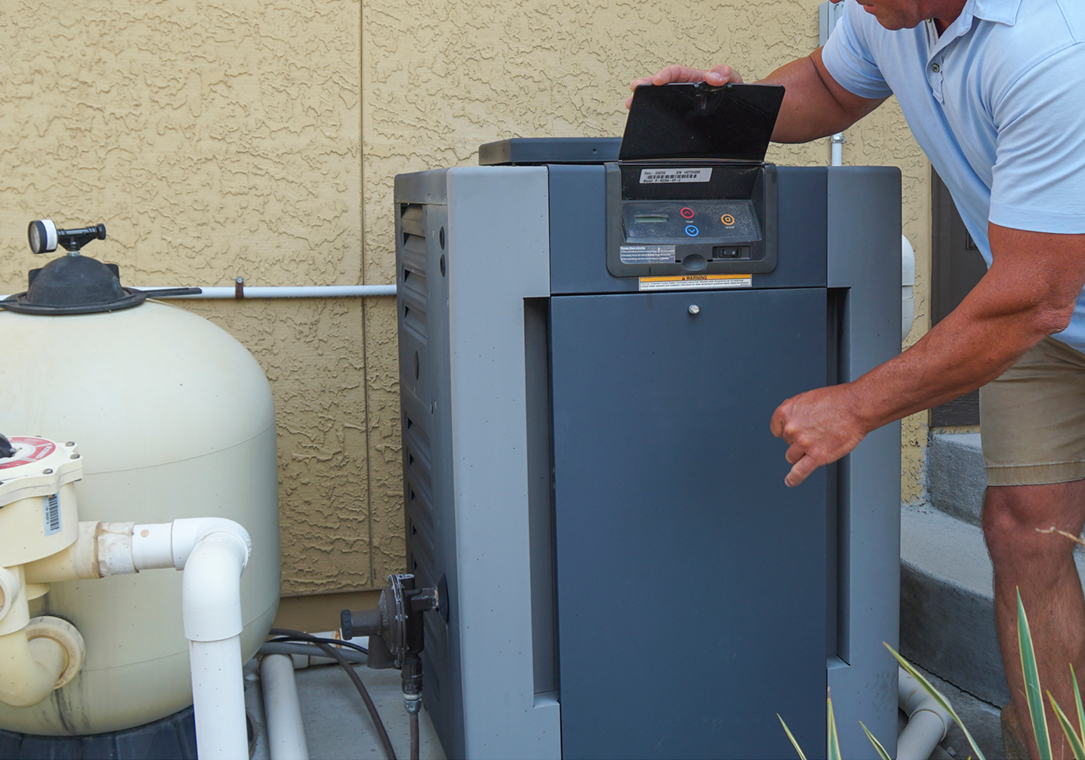
What Should I Know About Installation and Safety?
Tank installation for a propane pool heater should always be handled by a licensed or certified professional. Proper placement, ventilation, and gas line connections are critical to safe and efficient operation.
Key safety considerations include:
- Ensuring proper ventilation and airflow around the heater
- Following manufacturer installation and operating instructions
- Confirming correct clearance from structures and combustible materials
- Contacting 811 before digging to help locate underground utility lines such as electricity, water, and sewer. A local professional service or your propane provider can identify where propane lines are buried to help avoid accidental damage.
Ferrellgas handles propane tank installation and fuel delivery, plus provides tank maintenance for customers who lease their tanks. Customers who own their tanks should coordinate maintenance with a qualified professional. Planning installation carefully helps support safe operation throughout the swim season.
Planning Propane Deliveries for Pool Season
Working with a propane company that understands seasonal demand helps homeowners prepare for extended pool use. As pool usage increases, homeowners' propane demand may shift. Monitoring the tank gauge regularly helps identify usage patterns and plan accordingly.
Customers using Will Call delivery service should place an order when the tank level reaches 30% or at least 7 business days before needing propane.To request a refill, customers can text ORDER to 573-207-5975*, log in to MyFerrellgas.com, or call 888-337-7355.
Enjoy More Pool Days With the Right Propane Partner
A propane pool heater offers flexibility, steady performance, and greater control over the swim season. With thoughtful sizing, professional installation, and proper delivery planning, homeowners can create a more consistent pool experience throughout the year.
A knowledgeable propane supplier can assist with propane tank installation planning and delivery options. Contact Ferrellgas today to learn more.
Reliable Fuel for Your
Home and Appliances
*By texting ORDER, you agree to receive automated promotional text messages. Message and data rates may apply. Up to 10 messages per month. Reply STOP to unsubscribe or HELP for assistance. Messages are sent via automated systems. Delivery is subject to carrier availability. If you have pay-in-advance terms, you will be asked to pay using a secure link we will send from 573-207-5975.
CATEGORIES
Archives
- Fall 2026
- Summer 2026
- Spring 2026
- Winter 2025
- Fall 2025
- Summer 2025
- Spring 2025
- Winter 2024
- Fall 2024
- Summer 2024
- Spring 2024
- Winter 2023
- Fall 2023
- Summer 2023
- Spring 2023
- Winter 2022
- Fall 2022
- Summer 2022
- Spring 2022
- Winter 2021
- Fall 2021
- Summer 2021
- Spring 2021
- Winter 2020
- Fall 2020
- Summer 2020
- Spring 2020
- Winter 2019
- Fall 2019
- Summer 2019
- Spring 2019
- Winter 2018
- Fall 2018
- Summer 2018
- Spring 2018
- Winter 2017