

Propane Tank Sizes for Winter Appliances: Furnaces, Generators, and More
Adding a furnace, a generator, or a bigger heating setup means one more question to answer: what size propane tank fits what you’re running? This post is the winter edition of our full propane tank size guide, which covers general propane tank sizing. In this version, we focus on propane tank sizes for furnaces, boilers, fireplaces, space heaters, and generators. Use this guide as a starting point before consulting with your propane supplier for a final recommendation.
- Matching Tank Size to Winter Appliances: Get an appliance-by-appliance sizing guide for furnaces, generators, boilers, fireplaces, and space heaters.
- Winter Preparedness Starts With the Right Tank Size: Learn how your appliance setup affects winter propane usage and how to get your generator ready for the season, plus helpful propane safety reminders.
- Keep Your Tank Fueled This Winter: See how flexible delivery service options like Will Call and Auto Fill help keep your tank ready through the busiest stretch of the season.
Matching Tank Size to Winter Appliances
Explore this appliance-by-appliance guide to help you choose the right tank size for your setup so you are prepared for the upcoming winter weather. Remember to always consult with a qualified professional or your propane supplier when deciding on tank size and placement.
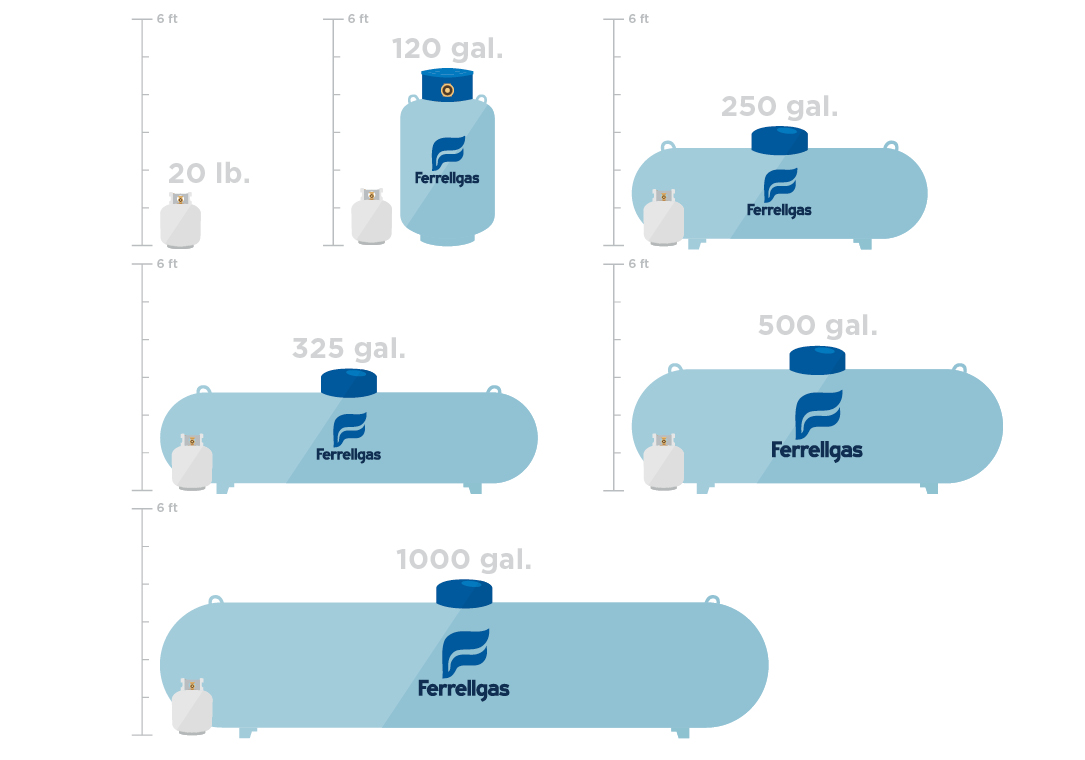
- Furnaces and Boilers: A 250-gallon tank can support a heating system for a modest-sized home, while a 500-gallon tank is the standard size for most households running central heating alongside other appliances.
- Space Heaters: Sizing depends on the kind of propane heater you use and whether it shares propane from your tank with other appliances. A 120-gallon tank may be enough for one large installed unit, while some portable outdoor heaters run on 20-pound cylinders.
- Fireplaces: These lower-demand appliances can often share a 120-gallon tank with one other appliance, or a 250-gallon tank with two other appliances, rather than requiring a dedicated large tank.
- Generators: A 325-gallon tank is well suited for backup propane generators or smaller homes that use less than 500 gallons of propane a year. Larger whole-home generators paired with additional heating needs may require a 500-gallon tank. Your generator manufacturer may also require a minimum tank size, so be sure to check the installation manual.
Running more than one winter appliance on propane may mean sizing up your current tank, or adding a second one, so your appliances aren’t competing for the same supply. For more information, review our in-depth propane tank sizes guide.
Winter Preparedness Starts With the Right Tank Size
If several appliances share one propane tank, winter is when that combined demand could add up. A furnace, water heater, and generator all drawing from the same fuel supply can use propane faster than expected, especially during a cold snap or extended power outage. Knowing what your tank supports and keeping an eye on your propane level helps you stay prepared for the busiest stretch of winter.
Propane can also support your home during winter storms. Because it is stored on-site in your tank, propane can fuel a generator to help keep your home running during power outages. Propane generators range from portable units that operate essential appliances to whole-home standby units that start automatically during an outage.
To get your propane generator ready for the season:
- Check your propane tank level and schedule a refill so you're fueled and ready to handle a storm or extended power outage.
- Confirm it is running as expected. Many standby generators run a scheduled self-test, so check your owner’s manual for how to confirm the generator and automatic transfer switch are working, or ask a qualified professional.
- Visually inspect your portable or standby generator for obvious damage or debris, and check visible fuel line connections for any signs of wear. If anything looks off, do not attempt repairs yourself. Always work with a qualified professional for maintenance and repairs.
- Most manufacturers of residential propane generators recommend professional service at least once a year. A preseason safety inspection is especially important if your generator hasn’t been serviced in the past 12 months. Always follow your manufacturer’s specific guidelines and work with a qualified professional for any inspections and repairs.
For more on staying ready through severe weather, visit our propane safety page or learn how propane keeps homes comfortable during winter storms.
Propane Safety Reminders
Keep these propane safety tips in mind during winter and throughout the year:
- Only heaters designed and approved for indoor use should be used inside your home. Always follow the heater manufacturer’s guidelines and confirm the right fit with a qualified professional.
- According to U.S. Consumer Product Safety Commission (CPSC) guidelines, portable generators should always be operated outside, at least 20 feet from your home and with the exhaust pointed away from windows, doors, and vents. Never use them indoors or in enclosed spaces to avoid the risk of potentially dangerous carbon monoxide buildup.
- Keep full or empty propane cylinders upright and outdoors, in well-ventilated areas at least 10 feet from windows, doors, and combustible materials. They should never be stored indoors or in enclosed spaces like basements, garages, sheds, and crawl spaces.
- If using a Blue Rhino propane cylinder, be sure to read, understand, and follow the instructions for safe use on the tank sleeve.
- During a power outage, use flashlights instead of candles because open flames can ignite leaking gas. It is important for everyone in your home to know what to do if they smell gas or suspect a leak in the propane tank.
Keep Your Tank Fueled This Winter
Whichever tank size fits your home, the same rule applies: schedule a delivery ahead of time, rather than waiting until you’re running low. Customers with Will Call delivery service should order before the tank gets low, ideally around 30% or at least 7 business days before needing propane. There are three simple ways to order:
- Text ORDER to 573-207-5975**
- Log in to MyFerrellgas.com
- Call 888-337-7355
If you would rather not self-manage propane deliveries, Auto Fill delivery service* is worth exploring. Ferrellgas uses local weather data and your household’s propane usage patterns to estimate when you’re ready for a fill, then schedule it automatically.
While Auto Fill customers are not required to inspect their tank percentages prior to each fill, it is still important to check your propane level from time to time, especially during periods of unusually high usage, such as adverse weather events. Pairing Auto Fill with a digital tank monitor* lets you and Ferrellgas see your propane level in real time, allowing for more accurate delivery planning.
*Qualification and active credit status are required for Auto Fill service. Availability and cost of digital tank monitors may vary by location.
Get Your Tank Ready for Winter
Whether you need a propane refill, plan to add a new propane appliance, or have questions about your propane setup, Ferrellgas is here to help. Contact us online or reach out to your local Ferrellgas team to get started.
Stay Ahead of Winter.
Refill Today.
**By texting ORDER, you agree to receive automated promotional text messages. Message and data rates may apply. Up to 50 messages per month. Msg frequency may vary. See Terms & Conditions and Privacy Policy. Reply STOP to unsubscribe or HELP for assistance. Messages are sent via automated systems. Delivery is subject to carrier availability. If you have pay-in-advance terms, you will be asked to pay using a secure link we will send from 573-207-5975.
CATEGORIES
Archives
- Fall 2026
- Summer 2026
- Spring 2026
- Winter 2025
- Fall 2025
- Summer 2025
- Spring 2025
- Winter 2024
- Fall 2024
- Summer 2024
- Spring 2024
- Winter 2023
- Fall 2023
- Summer 2023
- Spring 2023
- Winter 2022
- Fall 2022
- Summer 2022
- Spring 2022
- Winter 2021
- Fall 2021
- Summer 2021
- Spring 2021
- Winter 2020
- Fall 2020
- Summer 2020
- Spring 2020
- Winter 2019
- Fall 2019
- Summer 2019
- Spring 2019
- Winter 2018
- Fall 2018
- Summer 2018
- Spring 2018
- Winter 2017